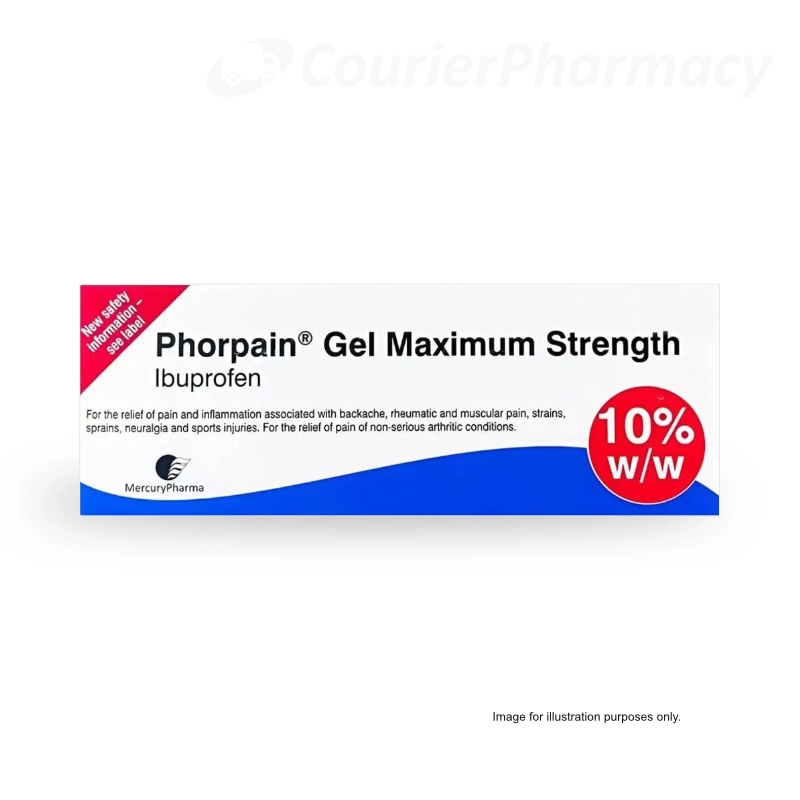
Ibuprofen gel 10% contains ibuprofen at 10% w/w concentration for the symptomatic relief of significant localised musculoskeletal pain and inflammation in adults aged 16 and over.
It delivers higher local ibuprofen concentrations than standard 5% formulations, making it appropriate for acute-on-chronic arthritis flares, significant soft tissue inflammation, and repetitive strain injuries.
Ibuprofen gel 10% is a Prescription Only Medicine, supplied after an online consultation reviewed by a UK-qualified prescriber.
Ibuprofen gel 10% is a higher-strength topical NSAID. It contains 10% w/w ibuprofen in a gel base. Prescribers may recommend it for adults aged 16 and over who need more local anti-inflammatory effect than a 5% gel provides.
You apply the gel directly to the painful area. Then ibuprofen passes through the skin into the underlying tissue. This helps reduce inflammation and ease pain. At the same time, it usually causes less whole-body exposure than oral ibuprofen.
The main difference between 10% and 5% gel is concentration. Put simply, the 10% gel creates a stronger “driving force” through the skin barrier. Therefore, more ibuprofen can reach the target area.
For osteoarthritis flares, significant soft tissue inflammation, or repetitive strain injuries, that higher strength may offer better relief. Still, it is not right for everyone. That’s why UK rules require a prescriber check before supply.
During the consultation, the prescriber reviews key safety points. For instance, they check NSAID allergy, pregnancy status, kidney and heart history, and current medicines. If this option doesn’t fit your situation, we’ll tell you clearly and suggest a safer alternative.
When localised inflammation needs a stronger response, ibuprofen gel 10% delivers more where it matters.
Not all joint or muscle pain is the same. The sprain you manage with a 5% gel and some rest is a different picture from the persistent inflammatory pain of an acute osteoarthritis flare, a repetitive strain injury that will not settle, or a soft tissue injury that needs a higher local ibuprofen concentration to make a meaningful difference.
Ibuprofen gel 10% delivers double the ibuprofen concentration of standard 5% formulations, achieving higher local tissue levels for conditions where that extra therapeutic depth is warranted.
Because it sits at the higher end of topical NSAID prescribing, it is a Prescription Only Medicine (POM) in the UK and is supplied through an online consultation with a UK-qualified prescriber.
At Courier Pharmacy, we are here to make that conversation straightforward, not bureaucratic.
Five things worth knowing straight away
Ibuprofen gel 10% contains ibuprofen at twice the concentration of standard 5% formulations, achieving higher local tissue concentrations for more significant inflammatory pain.
It is classified as a Prescription Only Medicine (POM) in the UK and can only be supplied after an online consultation reviewed by a UK-qualified prescriber.
Systemic absorption, while still substantially lower than oral ibuprofen, is higher with the 10% formulation than with the 5% gel and carries proportionally greater interaction and contraindication considerations.
It is intended for adults aged 16 and over; the higher strength threshold reflects the greater systemic exposure potential.
The same contraindications as oral ibuprofen apply with greater relevance at 10%: NSAID hypersensitivity, third-trimester pregnancy, and caution in renal, hepatic, and cardiovascular disease.
Treatment dosage: Ibuprofen gel 10%
Always follow the dosage instructions on the pack or as directed by your prescriber. The guidance below is based on standard BNF and SmPC information for topical ibuprofen 10% and should not replace personalised advice from a healthcare professional.
For adults aged 16 and over: apply a measured amount of gel, approximately 4 to 10cm in length depending on the treatment area, directly to the painful area three to four times daily. Gently massage into the skin until absorbed.
Wash hands thoroughly after application unless the hands are the treatment area. Leave at least four hours between applications and do not exceed four applications in 24 hours.
Do not apply to broken, damaged, infected, or inflamed skin.
Do not apply near the eyes, nose, mouth, or any mucous membrane.
Do not cover the treated area with an occlusive or airtight dressing. At 10% concentration, occlusive dressing significantly increases systemic absorption and should be strictly avoided. A loose, breathable bandage is acceptable where joint support is needed.
Do not use for more than two weeks without seeking medical advice, and stop if pain worsens or new symptoms develop.
Overview of ibuprofen gel 10%
Five key facts
The steeper concentration gradient created by a 10% formulation drives proportionally greater flux of ibuprofen across the stratum corneum than a 5% formulation, achieving higher local tissue concentrations in the underlying soft tissue and joint structures.
Systemic plasma concentrations from topical ibuprofen 10% remain substantially lower than oral ibuprofen equivalents but are measurably higher than those from 5% gel applied to the same area, making the prescriber check a clinically relevant safeguard.
NICE guidance on osteoarthritis recommends topical NSAIDs as a first-line pharmacological option for hand and knee osteoarthritis; for patients who have not responded adequately to the 5% formulation, the 10% concentration is a logical escalation before moving to oral NSAIDs.
The minimum age for use is 16, reflecting the greater systemic exposure potential at higher concentrations and the need for full risk assessment before prescribing this strength.
Ibuprofen gel 10% is supplied only after a prescriber review, which protects against inadvertent high-systemic-exposure scenarios from combined topical and oral NSAID use.
The clinical rationale for a 10% topical ibuprofen formulation sits in a specific therapeutic gap. For many people with mild to moderate localised pain, ibuprofen gel 5% is adequate and carries the lightest systemic footprint. For people with more significant inflammatory joint or soft tissue pathology who want to avoid oral NSAID use, or for whom oral NSAIDs are relatively contraindicated, the 10% gel offers a genuinely useful intermediate option.
The Prescription Only classification of 10% ibuprofen gel, compared with the general sale status of 5%, reflects a considered regulatory decision.
The MHRA classified the higher strength as requiring prescriber oversight because the greater systemic absorption potential brings the product into a zone where contraindications, interactions, and individual patient factors become more clinically significant.
A person with well-controlled hypertension taking an ACE inhibitor, for example, would be counselled more carefully about 10% gel applied over a large area than about the 5% formulation applied to a small joint.
People managing arthritis, repetitive strain injuries related to work or sport, or musculoskeletal pain flares in the context of broader chronic conditions often find that 5% gel has diminishing returns for more severe episodes.
The 10% formulation provides a meaningful step up without the gastric, renal, and cardiovascular load of oral NSAIDs, provided it is used correctly and the prescriber check is properly carried out.
Our prescribers and pharmacists at Courier Pharmacy can help you work through whether this is the right step for your specific presentation.
Consistent application remains more important than dose intensity. Three to four applications daily of a measured amount is more effective than irregular large amounts, because the local ibuprofen concentration needs to be maintained above the therapeutic threshold throughout the day for sustained COX inhibition.
At the 10% concentration, there is also greater potential for local skin reactions with excessive amounts, so using the minimum effective quantity is good practice.
The two-week self-treatment limit applies equally to the 10% formulation. If significant musculoskeletal inflammation is not responding to two weeks of appropriate topical anti-inflammatory treatment, this is a signal that the clinical picture needs proper medical assessment.
For chronic conditions like osteoarthritis, a structured management plan that includes physiotherapy, weight management, and potentially oral or compounded prescription analgesia will typically outperform indefinite reliance on topical treatment alone.
Why choose Courier Pharmacy for ibuprofen gel 10%
At Courier Pharmacy, our whole approach is built around the idea that healthcare should fit the person. For ibuprofen gel 10%, that means a prescriber and pharmacist who genuinely engage with your situation rather than running through a checklist in 30 seconds.
Our service is shaped by the philosophy of Dr Ada Jex-Cori, our brand pharmacist, who has built her practice around accessible, honest, personalised care. Her view is straightforward: you are not broken. The system is the problem. We are here to change that.
For people managing arthritis, chronic musculoskeletal conditions, or pain flares as part of a more complex health picture, including those managing general chronic illness or those for whom oral NSAIDs are problematic, the 10% gel can be a genuinely useful tool in a carefully considered pain management plan.
Our prescribers and pharmacists can help you work out where it fits, when a higher strength is warranted, and when the right move is a GP referral or a compounded topical option rather than a continued NSAID escalation.
We are GPhC-regulated, ground our content in NHS, NICE, BNF, and peer-reviewed evidence, and will tell you honestly when a product is not right for your situation. If ibuprofen gel 10% is not appropriate for you, we will explain why and suggest an alternative. That is what evidence-based, transparent pharmacy looks like in practice.
Buy ibuprofen gel 10% (Prescription Only) from Courier Pharmacy
Ibuprofen gel 10% is a Prescription Only Medicine (POM) in the UK. It can only be supplied after a UK-qualified prescriber has reviewed your online consultation. Our team will check for relevant contraindications and interactions before your prescription is issued.
Here is how our service works:
Complete a quick online consultation answering questions about your health, current medications, and the area you are treating.
A UK-qualified prescriber reviews your answers to confirm the product is suitable for you.
If approved, a prescription is issued and your order is prepared for dispatch.
We dispense and deliver discreetly to your door.
If ibuprofen gel 10% is not suitable for you, we will explain why and suggest the next best option. We would rather give you the right answer than a quick sale.
Our free fortnightly drop-in clinics at Insomnia, Derby run every other fortnight from 10 am to 12 pm. Topical versus oral pain management, stepping up from 5% to 10%, and when topical treatment is not enough are all conversations we have regularly at these sessions. No appointment needed, no charge, no pressure.
Active ingredient in ibuprofen gel 10%
The active ingredient is ibuprofen at a concentration of 10% weight for weight in a gel excipient base. Ibuprofen is a propionic acid NSAID that inhibits both COX-1 and COX-2 enzymes, reducing the production of prostaglandins, prostacyclins, and thromboxanes at the site of inflammation.
In the 10% topical formulation, the higher concentration gradient across the skin creates a greater thermodynamic driving force for passive diffusion of ibuprofen through the stratum corneum, resulting in higher dermal and subdermal concentrations compared with the 5% formulation applied to the same area.
The gel base in the 10% formulation typically contains similar excipients to the 5% version, including carbomer as the gelling agent, isopropanol as a penetration enhancer and solvent, and diethylamine to adjust pH.
The penetration-enhancing properties of isopropanol are particularly relevant at the higher ibuprofen concentration, where maximising the fraction of drug reaching the target tissue is the primary formulation objective.
The resulting local tissue concentrations have been shown in pharmacokinetic studies to achieve clinically relevant COX inhibition in superficial joints and adjacent soft tissues within one to two hours of application, comparable to the timescale for oral ibuprofen absorption.
What is ibuprofen gel 10% for?
Ibuprofen gel 10% is indicated for the symptomatic relief of localised musculoskeletal pain and inflammation in adults aged 16 and over. Its licensed indications include sprains, strains, backache, rheumatic and arthritic pain in peripheral joints, soft tissue injuries, and neuralgia.
The 10% strength is particularly appropriate when a standard 5% formulation has provided insufficient relief, when the inflammatory component of the presenting condition is more significant, or when a higher local ibuprofen concentration is judged clinically appropriate by the prescriber.
Typical presentations for which 10% gel is a logical choice include acute-on-chronic osteoarthritis flares in hand, wrist, elbow, knee, or ankle joints; significant soft tissue inflammation following sports injuries or workplace repetitive strain; and localised rheumatic pain where the 5% formulation is being used frequently without adequate control.
It occupies a therapeutic position between standard topical 5% ibuprofen and oral NSAID therapy, offering a meaningful step-up in local anti-inflammatory activity while retaining the systemic safety advantage of the topical route.
It is not the right choice for pain that is diffuse, widespread, or poorly localised, for visceral or internal pain, for pain that has not been clinically assessed and diagnosed, or for conditions that have not responded to two weeks of appropriate topical treatment.
If your pain requires frequent or indefinite topical NSAID use, a proper medical review is more appropriate than escalating to higher concentrations. Our prescribers are here to help you identify when that conversation with your GP is the right next step.
How does ibuprofen gel 10% work?
The mechanism of action of ibuprofen in the 10% gel formulation is identical to the 5%: inhibition of COX-1 and COX-2 enzymes locally within the target tissue, reducing prostaglandin synthesis and thereby reducing pain sensitisation, vasodilation, and the inflammatory response at the application site.
The pharmacological difference lies in the concentration achieved in the target tissue, not in the mechanism itself.
Passive diffusion of ibuprofen across the stratum corneum is governed by Fick's law of diffusion, which states that the flux of a substance across a membrane is proportional to the concentration gradient.
A 10% formulation creates a concentration gradient twice as steep as a 5% formulation, producing approximately twice the flux of ibuprofen across the skin per unit time, assuming the same skin barrier properties and application conditions. In practice, the relationship is not perfectly linear due to skin saturation effects and metabolism within the epidermis, but the principle holds: more ibuprofen reaches the target tissue from the 10% gel than from the 5%.
Systemic absorption follows the same gradient logic. Higher dermal concentrations lead to greater partitioning into dermal capillaries and therefore higher plasma levels, though these remain substantially lower than oral dosing. Pharmacokinetic studies comparing topical 10% gel with oral ibuprofen suggest plasma concentrations of approximately 10 to 15 percent of oral equivalents, compared with 5 to 7 percent for the 5% formulation. This difference is why the 10% product is Prescription Only and why its interaction and contraindication profile requires more careful individual assessment.
The local anti-inflammatory action of the 10% gel produces measurable reductions in synovial prostaglandin concentrations in superficial joints within two hours of application, correlating with the clinical observation of improved pain and reduced stiffness that many patients report in this timeframe.
The effect is sustained over the dosing interval with consistent three to four times daily application, as local ibuprofen concentrations are replenished before the previous dose has fully dissipated from the tissue compartment.
How to use ibuprofen gel 10%
Apply a measured strip of gel, approximately 4 to 10cm depending on the area, to the skin directly overlying the painful structure. Massage gently into the skin with circular movements until absorbed.
Use the smallest amount that provides adequate relief; applying more than needed does not proportionally increase efficacy once the skin's absorption capacity is saturated, and it increases the risk of local skin reactions and inadvertent systemic exposure.
Wash hands after application unless the hands are being treated. Three to four applications daily, spaced at least four hours apart, is the recommended frequency.
At the 10% concentration, the occlusion warning is especially important. Do not apply under waterproof plasters, cling film, sealed dressings, or any airtight covering. Occlusion increases both local skin temperature and hydration, which can increase the absorption of the 10% formulation to levels approaching oral systemic exposure. A loose, breathable elastic bandage for joint support is acceptable, but ensure the skin under the bandage remains ventilated.
If you are also taking oral ibuprofen or another NSAID for any reason, this should be flagged on your consultation, because the combined systemic load may be significant.
Monitor your skin during treatment. At the 10% concentration, local skin reactions such as redness, irritation, or contact sensitisation are somewhat more likely than with the 5% formulation, particularly with prolonged use.
If you notice a spreading skin reaction, discontinue the gel and speak to your pharmacist or prescriber. Keep a brief mental record of how much you are using per day; if you are applying to multiple large areas simultaneously, the cumulative systemic absorption may be more relevant than for a single small joint application, and a prescriber review of your overall pain management approach may be worthwhile.
Warnings and precautions for ibuprofen gel 10%
All of the contraindications that apply to ibuprofen gel 5% apply with greater emphasis to the 10% formulation. Do not use if you are allergic to ibuprofen, aspirin, or any other NSAID, including if you have NSAID-exacerbated respiratory disease (aspirin-sensitive asthma).
Do not apply to broken, damaged, or infected skin.
Do not apply near the eyes, mouth, nose, or mucous membranes.
Do not use under occlusive dressings.
Do not use in pregnancy, particularly in the third trimester, where use of any NSAID can cause premature closure of the ductus arteriosus; use in the first and second trimesters should be discussed with a midwife or GP.
Do not use in those under 16 years of age.
Cardiovascular and renal caution applies more meaningfully at 10% than at 5%. People with a history of heart failure, hypertension, ischaemic heart disease, or chronic kidney disease should discuss use with their pharmacist, prescriber, or GP before using ibuprofen gel 10%, particularly if treatment will involve large areas or frequent application.
The measurably higher systemic absorption at 10% concentration means that the renal prostaglandin effects, which contribute to NSAID-associated renal impairment and fluid retention, are more clinically relevant than with the 5% formulation.
People taking certain medicines need to exercise particular caution; see the drug interactions section below for a full account.
The Prescription Only classification of ibuprofen gel 10% is specifically because these considerations are meaningful at this concentration in a broader range of individuals than at 5%.
Photosensitivity reactions, while rare with topical ibuprofen, have been reported. Avoid direct sunlight on recently treated areas where possible. If you develop unusual sun sensitivity or an unusual rash on treated skin after sun exposure, discontinue the product and seek prescriber or pharmacist advice.
Side effects of ibuprofen gel 10%
Local skin reactions are the most common side effects and are somewhat more frequent at 10% than at 5% concentration. These include redness, itching, stinging, burning, and dryness at the application site.
Most are mild and resolve when treatment is discontinued or when the application amount is reduced. A contact dermatitis reaction, producing vesicles, scaling, or spreading erythema, is less common but requires discontinuation and pharmacist or GP review.
Systemic side effects, though still uncommon with correct topical use, are more possible at 10% than at 5%. These can include mild gastrointestinal symptoms, headache, dizziness, and fluid retention in individuals with susceptibility.
In people with pre-existing renal, cardiovascular, or gastrointestinal conditions, the threshold for systemic effects may be lower, which is why prescriber oversight before supply is clinically appropriate.
Rare but serious systemic effects are possible if large amounts are applied to large areas, if the product is applied under occlusion, or if the individual has particular susceptibility to NSAIDs.
These include severe allergic reactions including anaphylaxis, severe skin reactions such as Stevens-Johnson syndrome, renal impairment, and cardiovascular events in high-risk individuals.
If you develop any systemic symptoms that you associate with starting ibuprofen gel 10%, stop using the product and seek medical advice promptly.
Report suspected adverse reactions to the MHRA via the Yellow Card scheme at yellowcard.mhra.gov.uk. Your report helps regulators monitor real-world medicine safety.
Drug interactions with ibuprofen gel 10%
The interaction profile of ibuprofen gel 10% is more clinically relevant than that of the 5% formulation because systemic absorption is meaningfully higher. While interactions are still much less likely than with oral ibuprofen, the following groups warrant specific consideration and prescriber assessment before supply.
Other NSAIDs, including oral ibuprofen, naproxen, diclofenac, and aspirin, should not be used concurrently with ibuprofen gel 10% without professional assessment, particularly for large area applications. The combined systemic NSAID burden from oral and 10% topical use can be clinically significant, increasing the risks of gastrointestinal, renal, and cardiovascular NSAID-associated effects.
Antihypertensives including ACE inhibitors, ARBs, beta-blockers, and diuretics can have their efficacy reduced by systemic ibuprofen. At the doses absorbed from 10% gel over a localised area, this interaction is unlikely to be clinically significant for a standard short course, but it becomes relevant for people applying large amounts to large areas or using the gel regularly over several weeks. People with hypertension whose blood pressure is not well controlled should mention topical ibuprofen use to their GP.
Anticoagulants including warfarin: systemic ibuprofen affects platelet function and can enhance anticoagulant effects, increasing bleeding risk. Topical 10% gel applied to a small localised area for a short course is unlikely to produce this interaction, but people on warfarin should mention topical ibuprofen use to their anticoagulation clinic, particularly for longer courses or larger application areas.
Lithium and methotrexate levels can be increased by systemic NSAID exposure through reduced renal clearance. This interaction is most relevant with oral NSAIDs but applies to topical 10% gel at higher application loads. If you are on either of these medicines, this should be flagged in your consultation before treatment is supplied.
Frequently asked questions about ibuprofen gel 10%
What is ibuprofen gel 10% used for?
Ibuprofen gel 10% is used for the symptomatic relief of significant localised musculoskeletal pain and inflammation in adults aged 16 and over, including sprains, strains, backache, rheumatic and arthritic pain in peripheral joints, soft tissue injuries, and neuralgia. The 10% concentration is appropriate when a standard 5% formulation has provided insufficient relief or when a higher local ibuprofen level is clinically warranted.
What is the difference between ibuprofen gel 5% and ibuprofen gel 10%?
The concentration of ibuprofen is doubled in the 10% formulation, creating a steeper concentration gradient across the skin and achieving higher local tissue ibuprofen levels.
The 10% product is a Prescription Only Medicine, supplied only after prescriber review, while the 5% gel is available as a general sale or pharmacy medicine depending on pack size. The 10% carries greater systemic absorption potential and a correspondingly more significant interaction and contraindication profile. The minimum age for the 10% is 16.
Why is ibuprofen gel 10% a Prescription Only Medicine when the 5% is not?
The classification reflects the higher systemic absorption potential of the 10% formulation and the correspondingly greater relevance of individual patient factors, including cardiovascular and renal history, concurrent medicines, and age.
A prescriber review before supply ensures that people for whom increased systemic NSAID exposure is clinically significant are identified and counselled appropriately before treatment begins.
Can I use ibuprofen gel 10% if I am already taking oral ibuprofen?
This combination requires prescriber assessment. Using ibuprofen gel 10% over large areas while taking regular oral ibuprofen can produce combined systemic NSAID levels that carry gastrointestinal, renal, and cardiovascular risks.
For a small localised area on a short course, the combined load may be acceptable for a healthy adult, but this should be confirmed during the consultation, where your full medical and medication history can be reviewed.
How often should I apply ibuprofen gel 10%?
Three to four times daily, spaced at least four hours apart, up to a maximum of four applications in 24 hours. Consistent dosing maintains local ibuprofen concentrations above the therapeutic threshold throughout the day.
Apply a measured amount of 4 to 10cm per application depending on the area size. More frequent or larger applications are not more effective and increase the risk of local skin reactions and systemic absorption.
Is ibuprofen gel 10% safe during pregnancy?
No. Ibuprofen gel 10% is not recommended during pregnancy. NSAIDs, including topical ibuprofen, are contraindicated in the third trimester due to the risk of premature closure of the ductus arteriosus.
At the higher concentration of 10%, systemic absorption is more significant than from the 5% formulation, making the risk in earlier trimesters also more relevant. Seek advice from your midwife or GP before using any topical NSAID during pregnancy.
Can I use ibuprofen gel 10% for knee arthritis?
Yes. Knee osteoarthritis is one of the conditions most strongly supported by the evidence base for topical NSAIDs. NICE guidelines recommend topical NSAIDs as a first-line pharmacological treatment for knee osteoarthritis.
The 10% formulation is a logical choice when the 5% has not provided adequate control, providing a higher local ibuprofen concentration before escalating to oral NSAID therapy.
Is ibuprofen gel 10% stronger than diclofenac gel?
Ibuprofen gel 10% and topical diclofenac gel are both topical NSAIDs with comparable mechanisms of action. Direct concentration comparisons are not straightforward because diclofenac gel is typically formulated at 1% or 3%, but ibuprofen and diclofenac differ in their physicochemical properties and tissue penetration profiles.
Clinical evidence for both is well established for musculoskeletal conditions. The choice between them often comes down to prescriber recommendation based on your specific presentation and medical history.
Can ibuprofen gel 10% cause systemic side effects?
Yes, though they are substantially less likely than with oral ibuprofen. At 10% concentration applied to a standard localised area, systemic plasma concentrations are approximately 10 to 15 percent of oral equivalents.
For most healthy adults on a short course applied to a small area, systemic effects are unlikely. For people with cardiovascular disease, renal impairment, or those applying large amounts to large areas, the systemic exposure is clinically relevant and warrants prescriber assessment before use.
Can I apply ibuprofen gel 10% under a bandage?
Only under a loose, breathable bandage. Occlusive or airtight dressings including waterproof plasters, cling film, or sealed dressings significantly increase systemic absorption from the 10% formulation and should be strictly avoided.
If joint support is needed, use a breathable elastic bandage that allows air to circulate around the treated skin. Remove the bandage periodically to allow the skin to breathe.
How long can I use ibuprofen gel 10% for?
Self-treatment should not exceed two weeks without medical advice. If your pain has not improved within two weeks, or if it worsens at any point, stop using the gel and seek prescriber or GP assessment.
Persistent significant musculoskeletal inflammation that fails to respond to two weeks of appropriate topical treatment needs clinical evaluation to confirm the diagnosis and consider whether additional or prescription treatments are warranted.
Is there a maximum daily amount of ibuprofen gel 10% I should use?
Do not apply more than four times in 24 hours. There is no defined absolute maximum gram weight per day in the SmPC beyond this frequency restriction, but applying very large amounts to extensive areas significantly increases systemic absorption.
As a practical guide, using the minimum amount that covers the treatment area adequately and applying it three to four times daily is the correct approach. Discuss your usage pattern with your prescriber or pharmacist if you are treating multiple large areas simultaneously.
Can I use ibuprofen gel 10% for sports injuries?
Yes. Soft tissue sports injuries including sprains, strains, and muscle tears with an inflammatory component respond well to topical ibuprofen. The 10% formulation is appropriate for more significant injuries where the 5% gel has provided insufficient relief.
Topical ibuprofen is most effective when combined with the standard PRICE protocol (protect, rest, ice, compression, elevation) rather than used as the sole treatment.
What should I do if I get ibuprofen gel 10% on my face?
Rinse the area thoroughly with water immediately. Do not apply the gel near the eyes, nose, or mouth. The 10% concentration and the excipients including isopropanol can cause significant mucous membrane irritation.
If the gel contacts the eyes, rinse with clean water for several minutes and seek medical advice if irritation persists. Always wash hands after application to prevent accidental face or eye contact.
Can ibuprofen gel 10% interact with my blood pressure medicine?
Potentially. Systemic NSAIDs can reduce the effectiveness of antihypertensives including ACE inhibitors, ARBs, beta-blockers, and diuretics by inhibiting prostaglandin-mediated vasodilation and affecting renal sodium handling.
At the systemic levels from 10% gel applied to a localised area on a short course, this interaction is unlikely to be clinically significant for most people. However, if your blood pressure is not well controlled, or if you are applying the gel to large areas frequently, mention this to your prescriber or GP.
Does ibuprofen gel 10% expire?
Yes. The expiry date is printed on the tube and on the outer carton. Do not use after this date. Once opened, most topical gel formulations should be used within six to twelve months; check the specific product information for the in-use period. Store at room temperature below 25 degrees Celsius with the cap firmly replaced. Keep away from children and away from direct heat or sunlight.
Can I use ibuprofen gel 10% for nerve pain?
Neuralgia is a licensed indication. Topical ibuprofen can reduce the peripheral inflammatory component of nerve pain where local inflammation is contributing to nerve sensitisation. For neuropathic pain with a predominantly central or structural cause, topical anti-inflammatories are likely to provide only partial benefit. If your nerve pain is severe, persistent, or spreading, a GP assessment and potentially a prescription neuropathic pain treatment is more appropriate than continued NSAID-focused management.
Is ibuprofen gel 10% suitable for elderly patients?
Older adults can be prescribed ibuprofen gel 10%, but with greater caution than younger adults. Age-related changes in skin barrier function, renal clearance, and cardiovascular reserve mean that systemic absorption may be proportionally higher and the tolerance for NSAID-associated systemic effects lower.
NICE guidance on osteoarthritis acknowledges this and recommends using the lowest effective topical NSAID dose for the shortest necessary duration in older adults. A careful prescriber assessment before starting is particularly important in this group.
What should I do if ibuprofen gel 10% is not working?
If two weeks of consistent three to four times daily application has not provided adequate relief, stop the gel and seek prescriber or GP advice. The appropriate next step depends on the underlying condition: for osteoarthritis, oral NSAIDs, physiotherapy, or a specialist referral may be warranted; for soft tissue injury, imaging to rule out structural damage may be needed; for rheumatic disease, a disease-modifying or prescription treatment may be more appropriate.
A compounded topical pain cream may also be a useful next step. Do not simply escalate to more frequent or larger topical doses without clinical guidance.
Disclaimer: This article is for general information only and isn’t a substitute for personal medical advice, diagnosis, or treatment. Always check with a GP, pharmacist, or specialist before starting a new supplement if you have a medical condition or take regular medicines.
How do I get ibuprofen gel 10% from Courier Pharmacy?
Complete the online consultation at courierstaging.mystagingwebsite.com. A UK-qualified prescriber will review your answers, issue a prescription if appropriate, and our pharmacy team will dispense and deliver discreetly. Free pharmacist support is available before or after you order.
More than a prescription: our community
At Courier Pharmacy, we believe good healthcare includes honest community, not just dispensing. Our free fortnightly drop-in clinics and talks at Insomnia, Derby run every other fortnight from 10 am to 12pm.
Managing joint and muscle pain, understanding when topical treatments are enough and when prescription options make sense, and navigating the step from topical NSAID to compounded or oral treatment are all conversations we have regularly in a relaxed, no-pressure setting.
Whether you have a specific question about ibuprofen gel 10% or want to think through your broader pain management plan, you are welcome to come along.
Learn more about our community talks and find the next session date at courierstaging.mystagingwebsite.com. Healthcare should be accessible, not just when you are buying.
How this content was created
Written by the Courier Pharmacy editorial team and reviewed by a GPhC-registered pharmacist. Grounded in the latest NHS, NICE, BNF and EMC guidance, peer-reviewed studies, and the real questions patients bring to our drop-in clinics in Derby.
References
[1] Electronic Medicines Compendium (emc) (n.d.) Etoricoxib 30 mg film-coated tablets – Summary of Product Characteristics (SmPC). Available at: https://www.medicines.org.uk/emc/product/1242/smpc (Accessed: 11 May 2026).